Will 'Fortress Europe' help Mediterranean migrants?
EU leaders to meet in Brussels on Thursday to tackle migration crisis killing boat refugees
By Ilgin Karlidag
BRUSSELS
European leaders will gather Thursday in an attempt to resolve the humanitarian crisis that has seen the Mediterranean Sea become one of the world’s deadliest bodies of water.
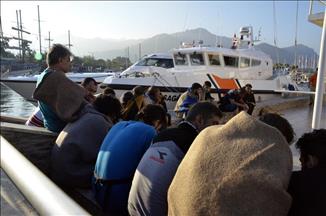
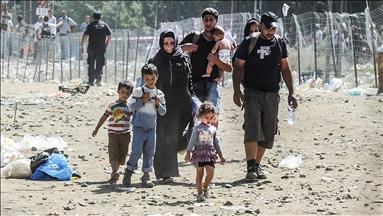
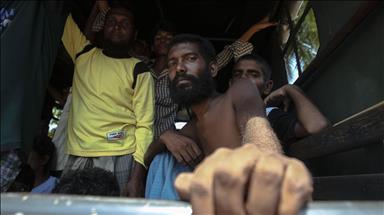
As refugees from Africa and the Middle East flee war and poverty to make the perilous crossing to Europe, EU leaders will meet in Brussels to flesh out a 10-point migration plan after more than 800 people lost their lives off the Libyan coast last weekend.
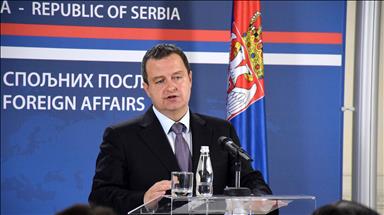
Ahead of the meeting, Greek Deputy Defense Minister Kostas Isihos called on the "great powers" of Europe to take more responsibility for the Mediterranean crisis. He told the BBC on Wednesday that northern Europe must do more to rescue and shelter migrants.
Among the proposals to be discussed Thursday is a plan to seize and destroy the boats used by people traffickers. "We have to tackle them," British Foreign Secretary Philip Hammond said Monday. "We have got to work upstream in the countries from which these people are coming and we are determined to put an end to this vile trade."
There are also plans to provide Frontex, the agency that runs the EU's Mediterranean rescue service Triton, with additional resources and to extend Triton's operational area.
Critics say it was the West’s decision to help overthrow the Gaddafi regime in 2011 -- leaving Libya without a functioning government -- that has helped cause the crisis.
The abandonment of Italy’s Mare Nostrum rescue operation last year and its replacement with the EU’s Triton scheme has also been seen as a significant factor.
The operation, which saved more than 140,000 lives, was cancelled due to cost and because critics said it encouraged refugees to flee to Europe across the Mediterranean.
In a statement released Wednesday, Amnesty International disputed this claim.
"The myth that Mare Nostrum acted as a ‘pull factor’ is… dispelled by figures which show that the number of refugees and migrants attempting to cross into Europe by sea has increased since the end of the operation," Amnesty said.
The human rights group decried the current system, which has less than a third of the funding provided to Mare Nostrum, saying that "current search and rescue operations are far from what is required to address the humanitarian crisis currently unfolding in the Mediterranean."
Amnesty’s Director for Europe John Dalhuisen added: "Europe’s negligence in failing to save thousands of migrants and refugees who run into peril in the Mediterranean has been akin to firefighters refusing to save people jumping from a towering inferno.
"Governments’ responsibility must clearly be not only to put out the fire but to catch those who have stepped off the ledge."
Critics of the EU leadership have accused it of caring less about saving lives than protecting Europe’s borders, reinventing the term "Fortress Europe."
"Migrants are seen less as human being than as flotsam and jetsam to be swept off Europe’s beaches," columnist Kenan Malik wrote in the International New York Times on Wednesday.
The "Fortress Europe" epithet, which echoes the term used for the Nazi defenses along the European coast, reflects the billions of euros spent on external border controls.
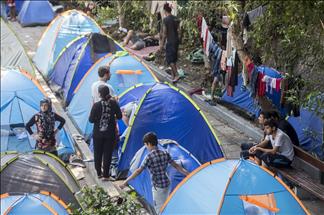
Meanwhile, the plight of the desperate refugees mounts.
In 2014, Frontex recorded 278,000 crossings into EU territory -- almost two-and-a-half times more than in 2013 and twice as many as in 2011.