
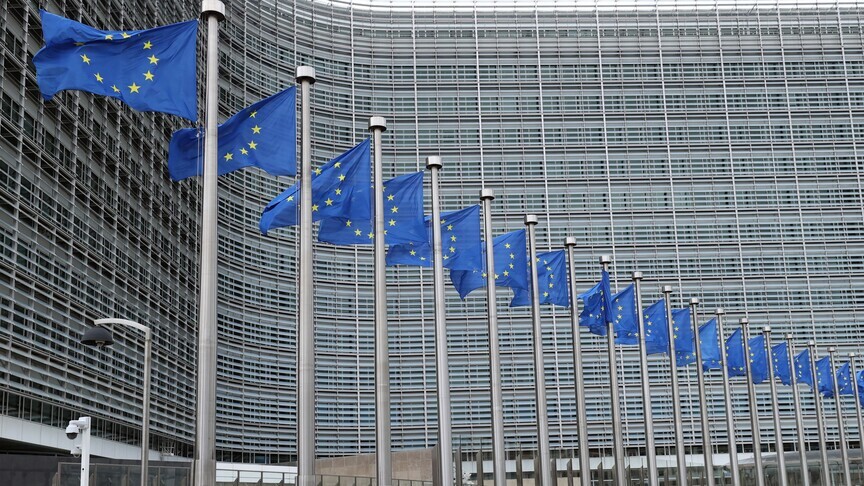
EU leaders remain deeply divided over the bloc's next seven-year budget, with disagreements over its overall size, national contributions, funding priorities, and support for Ukraine preventing a breakthrough in negotiations.
The dispute reflects competing national interests, as wealthier member states seek to limit their contributions, while countries relying on EU funding oppose reductions to programs supporting regional development and agriculture.
The negotiations also carry geopolitical implications, as the 2028-2034 Multiannual Financial Framework (MFF) will determine the bloc's financial capacity to strengthen its defense, support Ukraine, improve its competitiveness, and prepare for further enlargement, particularly in the Western Balkans.
The European Commission proposed in July 2025 that the EU's long-term budget for 2028-2034 amount to €1.985 trillion ($2.177 trillion) at current prices.
However, several wealthy member states, led by Germany, opposed the proposed spending level.
European Council President Antonio Costa subsequently presented a compromise proposal on Nov. 21, reducing the commission's figure by approximately €204 billion ($223.7 billion), or 10%, to €1.781 trillion ($1.953 trillion).
Despite the reduction, the proposed framework would remain nearly 50% larger than the current 2021-2027 budget.
The European Parliament, meanwhile, is seeking approximately €2.01 trillion, equivalent to 1.27% of the bloc's gross national income, excluding repayments of debt linked to the post-pandemic recovery fund.
President Roberta Metsola has warned that the parliament will not automatically approve an agreement reached by member states, saying its priorities must be reflected in the final framework.
The three positions illustrate the divisions: the Commission's original €1.985 trillion proposal, Costa's revised €1.781 trillion compromise and parliament's demand for approximately €2.01 trillion.
The negotiations revolve around how much the EU should spend, how the money should be distributed and how the bloc should finance its priorities without placing an excessive burden on national governments.
A central disagreement involves the contributions of the bloc's largest net contributors.
Seven countries – Austria, Belgium, Germany, Denmark, Finland, the Netherlands, and Sweden – have been described as the "Sensible Seven" or the "frugal" group. They are calling for a smaller overall budget, the preservation of rebates, and stricter spending discipline, including limits on funding allocated to less-developed regions.
Berlin and like-minded countries have called for deeper spending reductions, ruled out new common borrowing, and demanded that the budget prioritize defense capabilities and sustained support for Ukraine.
German Chancellor Friedrich Merz argued that Berlin pays approximately a quarter of the EU budget but receives only around 8% of its funds directly.
"Europe needs to exercise a sense of proportion when shaping its own budget. The budget cannot grow indefinitely, and the burden of financing it must be distributed fairly," Merz said.
German media reports indicated that Berlin would prefer reductions of around €400 billion from the commission's original proposal, bringing the total closer to €1.59 trillion.
On the other side, countries belonging to the Friends of Cohesion group are calling for an ambitious, fair, and balanced EU budget that preserves funding for traditional policies while addressing emerging priorities.
The group includes Bulgaria, Czechia, Estonia, Greece, Spain, Croatia, Hungary, Italy, Lithuania, Latvia, Malta, Poland, Portugal, Romania, Slovenia, and Slovakia.
Following a coordination meeting organized by Italy and Romania ahead of the negotiations, leaders adopted a joint statement saying the proposed budget had shrunk to 1.02% of the EU's gross national income, excluding repayments linked to the post-pandemic recovery fund, after two successive reductions.
They called for the protection of national and regional allocations under the National and Regional Partnership Plans, including funding for cohesion and agriculture, arguing that sufficient resources must be accompanied by rules safeguarding the specific objectives of these policies.
The leaders also called for a fairer distribution of the financial burden among member states, including through any new EU revenue sources, and rejected preferential rebates, saying GNI (gross national income)-based corrections had no place in a modernized and fair EU budget.
Another disagreement concerns how the EU should finance its next budget.
Costa's proposal includes new revenue sources, including a digital tax targeting large companies, intended to help finance EU spending and limit direct contributions from member states.
France has advocated introducing new EU-wide revenue sources, including a digital services tax, while Hungary has questioned the proposed financial arrangements, arguing that its contributions should be proportionate to its economic capacity.
Although the divisions are often described as a confrontation between wealthy contributors and countries benefiting from EU funding, national positions are more complicated.
French President Emmanuel Macron has described the proposed €204 billion reduction as a "strategic mistake," warning that cuts would leave European public investment trailing behind the US and China.
Paris also wants to protect agricultural funding under the Common Agricultural Policy and has called for new EU revenue sources to help finance the bloc's priorities.
France is also facing a domestic political deadline. Macron warned that if an agreement is not reached by Dec. 31, formal discussions could resume only in the second half of 2027, citing the proximity of the country's spring 2027 presidential election.
Italy has also rejected the current compromise. Prime Minister Giorgia Meloni said Rome would not sign the proposal under the current conditions, describing the EU as "light years away from a solution."
Italy objects to arrangements that would increase its contributions while reducing the funding it receives, particularly under cohesion and agricultural policies.
According to Italian daily Corriere della Sera, the proposed changes could create an estimated €3 billion gap for Italy over the seven-year period.
The Visegrad countries – Poland, Czechia, Slovakia, and Hungary – together with Austria, have also rejected the revised proposal.
Their positions, however, differ on Ukraine.
Poland wants stronger security investment along NATO's eastern flank and continued support for Kyiv, while Slovakia opposes further EU-backed military financing.
Hungary rejects making financial assistance for Ukraine mandatory under the seven-year budget, and Czechia has raised objections to elements of the proposed financing arrangements.
Hungary has separately argued that the proposed budget would make it one of the bloc's largest net contributors per capita, despite its reliance on regional funding.
The MFF determines the resources available to the EU to implement its policies and pursue its political, economic, and geopolitical priorities over seven years.
The next budget is particularly important as the bloc seeks to strengthen its position amid growing international competition, security challenges, and Russia's war against Ukraine.
Costa's proposal envisages a 232% increase in defense funding and a 120% increase in competitiveness spending compared with the current framework.
It also foresees increased funding for migration management and border control, while strengthening the EU's international role.
At the same time, cohesion and agricultural funding would remain among the largest spending areas.
The next budget is also crucial for the EU's enlargement ambitions, particularly as Montenegro and Albania advance in their accession processes.
European Commission President Ursula von der Leyen described enlargement as a "strategic imperative" following the Nov. 25 EU-Western Balkans summit, saying the bloc had reviewed what further expansion would mean for its institutions, policies, and budget.
EU leaders failed to reach an agreement after 14 hours of discussion during the special summit in Brussels on Thursday.
Costa called on member states to demonstrate flexibility, while Merz acknowledged that their positions remained far apart.
Leaders are expected to resume negotiations at a two-day European Council summit on Dec. 17-18.
The MFF requires unanimous approval from all 27 member states, followed by the consent of the European Parliament.
With France signaling a December deadline, Italy refusing to sign under the current conditions, and several other countries demanding substantial changes, negotiations remain difficult.
The central question is whether the bloc can agree on a financial framework ambitious enough to support its geopolitical, economic, and enlargement objectives while ensuring that the burden is distributed acceptably among its member states.
news_share_descriptionsubscription_contact

contact_the_ombudsman
is_there_an_error_in_this_story