Hussien Elkabany and Tarek Chouiref
31 August 2026•Update: 31 August 2026
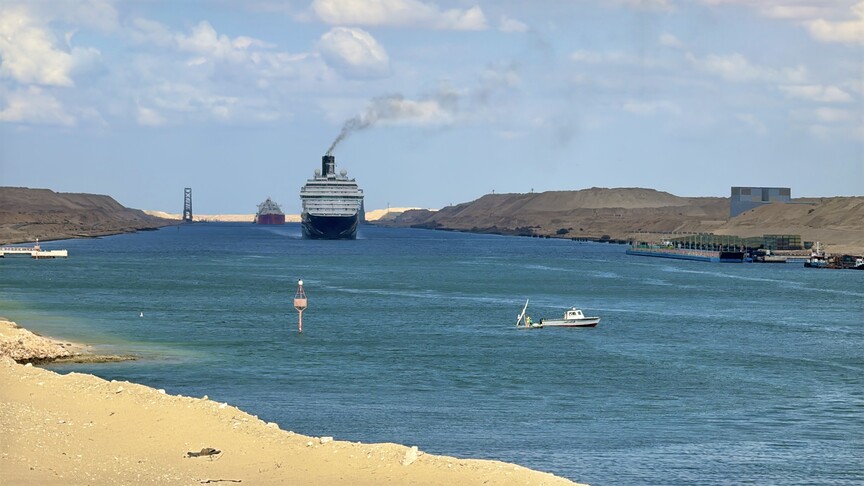
Egypt on Sunday ruled out using the Suez Canal or other state assets to settle government debt, saying the strategic waterway is not part of any such plan.
The Cabinet issued the statement after a proposal circulated suggesting that some state assets could be transferred to the Central Bank of Egypt in exchange for reducing part of the government’s domestic debt.
It said the proposal was a “purely personal view” and did not reflect government policy, stressing that the idea was “unacceptable and will not happen.”
The Cabinet was particularly categorical about the Suez Canal, saying there are no plans to swap, mortgage or transfer ownership of the waterway in exchange for debt.
It said the canal is directly tied to Egypt’s national security and sovereignty and plays a central role in both the country’s economy and global trade.
The government also rejected the broader premise of shifting state assets to the Central Bank, arguing that moving assets and liabilities between public institutions would not reduce the country’s overall obligations.
Public debt, it said, must instead be addressed through its structure, servicing costs, domestic liquidity, and the broader impact on fiscal and monetary policy.
Hassan Heikal, an adviser to the prime minister, floated the idea Saturday, suggesting that Egypt could use stakes in state-owned companies or even the Suez Canal to offset domestic debt by transferring the corresponding liabilities to the Central Bank.
He cited a recent debt settlement involving Egypt’s National Media Authority, formerly known as Maspero, as a possible model.
On Thursday, the government announced an agreement to settle 88.3 billion Egyptian pounds ($1.77 billion) owed by the authority to the National Investment Bank, without disclosing the terms of the settlement or the assets involved.