Berk Kutay Gokmen
28 August 2026•Update: 28 August 2026
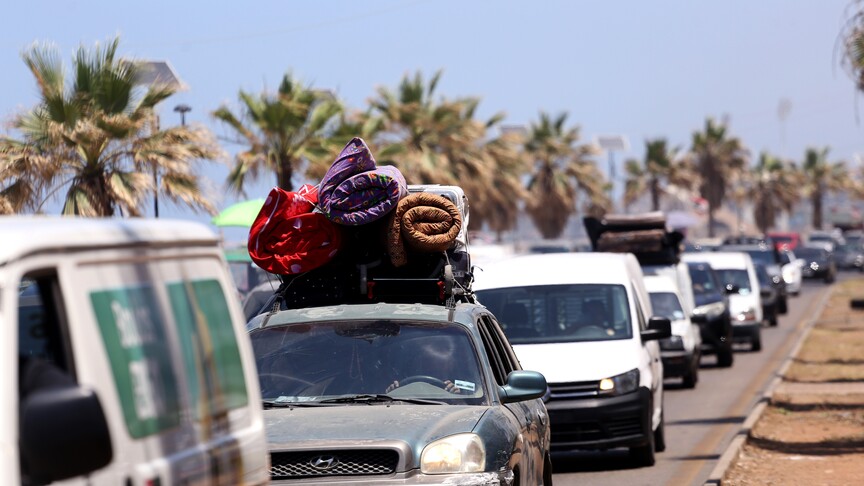
UN spokesman Stephane Dujarric warned on Friday that some 330,000 people remain displaced across Lebanon as renewed hostilities in the country’s south continue to take a heavy toll on civilians.
Briefing reporters in New York, Dujarric said around 820,000 people returned to their communities over the past few months, including nearly 90% of those displaced in the South Governorate.
“However, some 330,000 people displaced across remained displaced across Lebanon,” he said, adding that humanitarian access remained a major challenge, particularly south of the Litani River.
“Access constraints are hampering humanitarian teams from reaching some of the communities and delaying assessments, monitoring the restoration of essential services, and the delivery of food assistance,” Dujarric said.
He stressed that “unimpeded access to people in need is essential” to sustain humanitarian aid and support recovery as families return to areas affected by insecurity, damaged infrastructure and limited services.
Israel has continued military operations in Lebanon since launching a new offensive on March 2, with its forces advancing into additional areas of the south.
On June 26, Lebanon and Israel reached a US-mediated framework agreement providing for a gradual Israeli withdrawal from occupied Lebanese territory in exchange for the deployment of the Lebanese army and the disarmament of armed groups, including Hezbollah.
US-sponsored talks have since continued over implementation of the agreement, including Israeli withdrawal and Lebanese army deployment, while Israeli attacks on southern Lebanon have persisted.
Regarding the Gaza Strip, Dujarric said UN humanitarian workers remained concerned about ongoing Israeli airstrikes and other attacks.
Citing UNICEF, he said four children aged between 2 and 16 were killed in separate Israeli strikes in recent days, including one who died from wounds sustained last week.
The attacks also destroyed humanitarian supplies and damaged critical water infrastructure, he said, stressing that “civilians and civilian objects, including humanitarian facilities and infrastructure, must always be protected.”