Abdulfattah Kasim Mohamud is the Minister of Information, Culture and Tourism of the Federal Government of Somalia.
For much of the past three decades, Somalia has largely been viewed through the lenses of conflict, terrorism, humanitarian crises, and state fragility. Consequently, external engagement has often focused on emergency relief, short-term stabilization, or narrowly defined security assistance. While these interventions have addressed immediate challenges, they have rarely generated the institutional foundations necessary for long-term resilience. Against this backdrop, Türkiye has developed a markedly different approach. Rather than treating humanitarian assistance, development, security, and economic cooperation as separate policy domains, Ankara has pursued a comprehensive partnership aimed at strengthening Somalia’s sovereign capacity across multiple sectors.
The evolution of Türkiye-Somalia relations since 2011 demonstrates a gradual transition from humanitarian solidarity to strategic institutional partnership. Hospitals, military academies, schools, infrastructure projects, maritime cooperation, and, more recently, energy exploration should not be understood as isolated initiatives. Instead, they form complementary components of a broader state-building framework designed to strengthen Somalia’s institutions, improve public service delivery, enhance security, and expand economic opportunities. The defining feature of Türkiye’s engagement, therefore, lies not in the scale of its individual projects but in the coherence of the overall model, which seeks to reinforce state capacity rather than create long-term dependency. This layered and institutionalized approach has become one of the distinguishing characteristics of Türkiye’s positive role in Somalia.
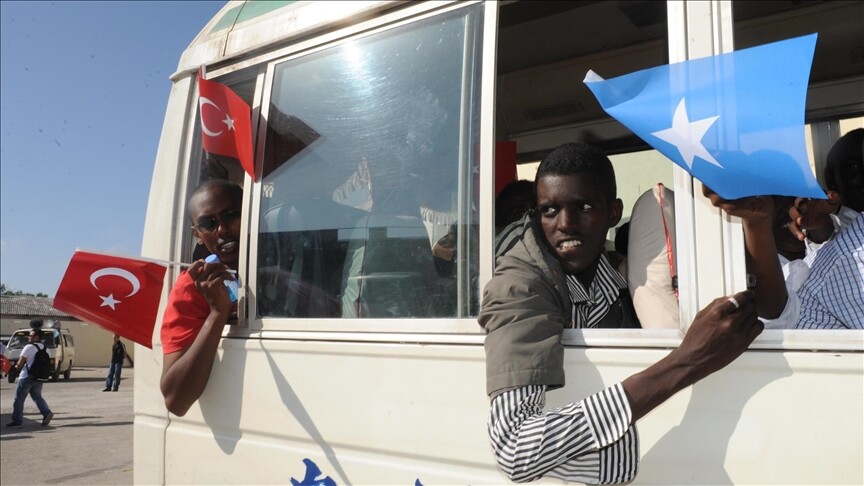
The turning point in bilateral relations came during the devastating famine of 2011. Türkiye’s response went beyond humanitarian relief. The visit to the capital, Mogadishu, of Recep Tayyip Erdogan, the Turkish prime minister who later became president, symbolized a commitment to remain engaged after the immediate crisis had subsided. While humanitarian assistance established trust within Somali society, subsequent initiatives gradually transformed that trust into institutional cooperation spanning health, education, infrastructure, trade, and security. This continuity distinguishes Türkiye from many external actors whose engagement has often fluctuated according to changing political priorities or security concerns.
Healthcare has become one of the clearest manifestations of this long-term commitment. Mogadishu’s Recep Tayyip Erdogan Training and Research Hospital has evolved into far more than a medical facility. It contributes simultaneously to healthcare delivery, professional medical education, institutional management, and public confidence in state institutions. Thousands of Somali healthcare professionals have benefited from training programs, while millions of patients have received modern medical services. In fragile states, functioning public services are themselves instruments of state legitimacy. By strengthening Somalia’s healthcare capacity, Türkiye contributes not only to improved health outcomes but also to rebuilding citizens’ confidence in public institutions.
Education follows the same logic. Turkish scholarships, the Turkish Maarif Foundation, vocational education programs, and academic exchanges invest in Somalia’s future human capital. Rather than simply transferring knowledge, these initiatives help cultivate future civil servants, diplomats, engineers, healthcare professionals, entrepreneurs, and academics capable of sustaining Somalia’s institutional development. The long-term value of educational cooperation, therefore, lies not merely in producing graduates but in strengthening the country’s administrative and professional capacity.
Security cooperation similarly extends well beyond military assistance. Through the Türkiye-Somalia Military Training Base TURKSOM and training of the Gorgor Special Forces and Haramcad Police units, Türkiye supports the professionalization of Somalia’s security institutions. Importantly, this approach focuses on enabling Somalia to provide its own security rather than creating dependence on foreign forces. Professional military education, command structures, operational planning, logistics, and institutional discipline all contribute to strengthening Somalia’s sovereign security capacity. Security, in this context, becomes an essential pillar of state-building rather than a standalone military objective.
The distinctive characteristic of Türkiye’s engagement is that individual initiatives reinforce one another rather than operating independently. Humanitarian diplomacy creates public trust. Trust facilitates educational cooperation. Education strengthens public administration. Stronger institutions improve security governance. Enhanced security attracts investment. Infrastructure supports trade. Maritime security enables the blue economy and offshore energy development. Instead of isolated interventions, these sectors function as interconnected components of a broader institutional ecosystem.
This integrated approach differs significantly from conventional development models that often compartmentalize humanitarian aid, security assistance, and economic cooperation. Türkiye’s experience in Somalia demonstrates that lasting stability cannot emerge solely through military operations, nor can development succeed in the absence of functioning institutions. Sustainable progress requires simultaneous investments across multiple sectors that reinforce one another.
Economic cooperation illustrates this logic particularly well. The modernization of Mogadishu Port, improvements at Aden Adde International Airport, Turkish Airlines’ direct flight service, financial cooperation, and expanding private sector investments all contribute to reconnecting Somalia with regional and global markets. These projects generate employment and facilitate trade, but they also strengthen the state’s fiscal capacity, improve public revenue generation, and enhance institutional governance. Economic infrastructure thus becomes another mechanism through which state capacity is reinforced rather than merely expanded.
The same integrated philosophy now extends into newer strategic sectors. Maritime security, offshore energy exploration, fisheries management, and the broader blue economy represent the latest stage of bilateral cooperation. Rather than pursuing resource extraction alone, Türkiye’s energy partnership seeks to strengthen Somalia’s ability to manage its own maritime resources through legal frameworks, technical expertise, regulatory institutions, and maritime security. In doing so, this cooperation contributes directly to Somalia’s economic sovereignty and long-term development prospects.
As Somalia continues consolidating its institutions, another dimension of state capacity is becoming increasingly important: the information domain. Modern state-building is no longer determined solely by physical infrastructure or security institutions. Governments must also possess the ability to communicate effectively with citizens, maintain institutional credibility, and respond rapidly to disinformation campaigns that seek to undermine public trust.
In recent years, Türkiye has significantly strengthened its own institutional communication architecture through strategic communication, public diplomacy, crisis communication, and systematic efforts to combat disinformation. These experiences, developed under the coordination of the Presidency of the Republic of Türkiye’s Communications Directorate, provide an additional area for future Türkiye-Somalia cooperation. Rather than exporting a communication model, Türkiye can contribute by sharing institutional experience that can be adapted to Somalia’s own political, cultural, and administrative context.
Future cooperation could therefore include capacity-building programs for government communication offices, professional media training, strategic communication planning, crisis communication mechanisms, digital literacy initiatives, and institutional capabilities to counter disinformation while strengthening transparency and public trust. Such cooperation would complement existing partnerships in health, education, and security by reinforcing another essential pillar of modern governance: resilient public communication.
In Somalia’s evolving political environment, where misinformation can exacerbate political polarization, undermine democratic processes, and weaken confidence in state institutions, strengthening communication capacity represents an investment in institutional resilience. Equally important, professional journalism, responsible public communication, and effective public diplomacy can contribute to a healthier information environment that supports both democratic governance and national stability.
Türkiye’s role in Somalia today extends well beyond traditional domains of humanitarian assistance, development aid, and security cooperation. Over the past 15 years, these different areas have gradually evolved into a comprehensive partnership model centered on strengthening Somalia’s sovereign capacity. Rather than addressing isolated crises, Türkiye has sought to contribute to the long-term development of institutions capable of delivering security, public services, economic opportunity, and governance.
As Somalia enters a new phase of political and economic transformation, the sustainability of this partnership will increasingly depend on institutional deepening rather than project expansion alone. Alongside healthcare, education, security, maritime cooperation, and economic development, strategic communication and institutional resilience may emerge as the next frontier of bilateral cooperation. Ultimately, Türkiye’s comparative advantage in Somalia lies not simply in the infrastructure it builds or the assistance it provides, but in its consistent effort to help Somalia build the institutional capacity necessary to shape its own future.
*Opinions expressed in this article are the author's own and do not necessarily reflect the editorial policy of Anadolu.
news_share_descriptionsubscription_contact

contact_the_ombudsman
is_there_an_error_in_this_story