MUNICH (AA) -The court hearing of a case against a chief suspect plus four others on the charges of killing 10 people, including 8 Turks between the years of 2000 and 2007, took start on Monday in Germany.
A year and a half after German security authorities became aware about the existence of a neo-Nazi terror cell, a court in Munich began on Monday hearing of a case against a chief suspect plus four others on the charges of killing 10 people, including 8 Turks, a Greek national and a German policewoman, between 2000 and 2007, 14 bank robberies, arson and aiding a terrorist group.
High security measures have been taken inside and outside of the courthouse in Munich.
Leading suspect Beate Zschaepe has been brought to the Munich courthouse in an armoured vehicle escorted by police about an hour and 20 minutes ahead of the court hearing and she was taken into the building from the garage entrance.
Zschaepe is accused of collaborating in murders, being a member of a terrorist organization and incension. Four other suspects, Holger G, Carsten S, Andre E and Ralf Wohlleben will come up before the judge due to assisting NSU terror cell. Moreover, Uwe Mundlos and Uwe Bonhardt committed suicide in a caravan in the city of Eisenbach in Germany, on November 4, 2011.
The case is expected to take place with 85 hearings and extend up to two years. There are about 60 solicitors representing 80 interlocutors and 606 witnesses will be interviewed. Five people will appear in the dock and the German prosecutors prepared a 488-page indictment.
In the "A 101" court room, there are 250 seats and the presiding judge of the case is Manfred Gotzl.
The first court hearing was expected to take place on April 17 however due to the first press accreditation of the court and that no space was shown for Turkish press organs, later on, a German court decided that press members to cover the trial would be selected in a drawing, and postponed the first trial to May 6.
A total of 50 media members are allowed to cover the trial in the courthouse.
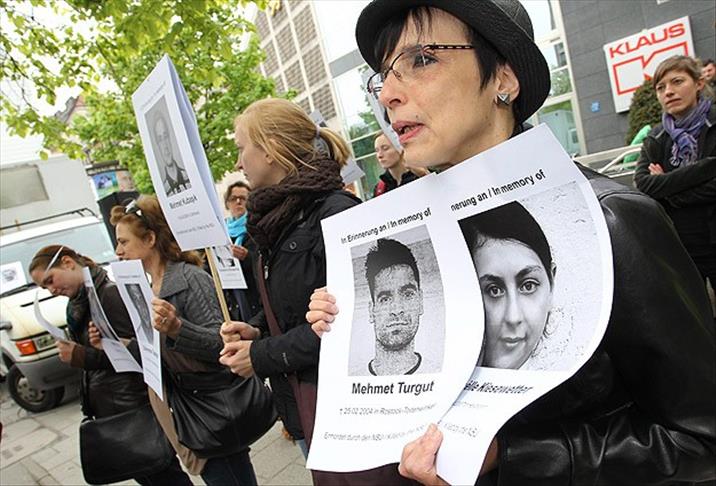
Relatives and kinsmen of the victims and the sufferers of the NSU terror cell have been taken into the court room from the side entrance of the building.
The "National Socialist Underground" (or NSU) trial, the highest-profile criminal case in Germany in the past decades, also brings into question modus operandi of Germany's domestic intelligence agencies, fueling doubts that German authorities had been "reluctant" to clamp down on the NSU when it staged its first attack, a bombing in 1998 in the city of Jena.
A string of revelations about the NSU and its ties since November 2011, when the cell's existence first came to light after Uwe Mundlos and Uwe Bonhardt -- two of the three known members of the NSU who allegedly killed themselves following a failed bank robbery -- have sent shock waves through German politics, security bureaucracy and the Turkish community, and expectations have been raised that the trial will shed light on suspicions involving German state institutions.