- ‘When you’re able to see results, you’re inspired to do even more,’ says Angela Churie Kallhauge
- ‘Addressing methane is actually an economic opportunity,’ Kallhauge notes
Cutting methane emissions offers an opportunity to slow climate change while strengthening energy security, an Environmental Defense Fund executive said, urging countries to accelerate action and make better use of wasted gas.
Angela Churie Kallhauge, executive vice president for impact at the Environmental Defense Fund (EDF), told Anadolu that reducing methane emissions could help slow climate change within people’s lifetimes.
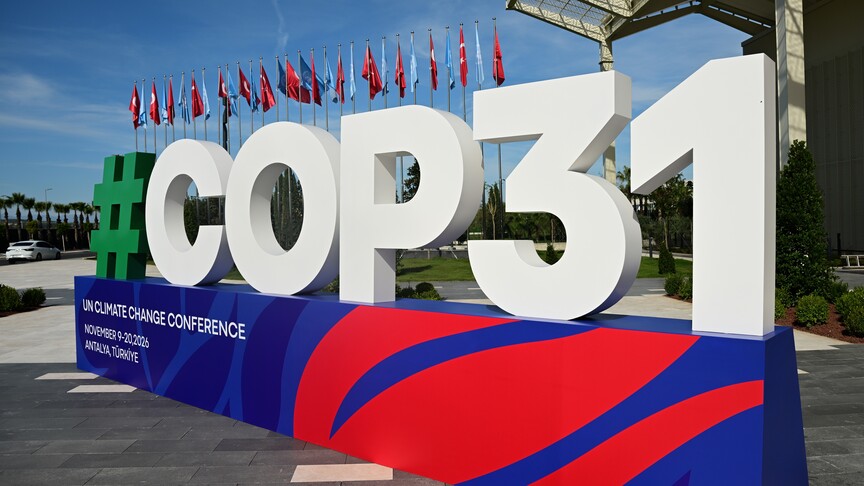
Speaking on the sidelines of the UN climate summit COP31, Kallhauge said methane action was particularly important because of the gas’s powerful greenhouse effect and the potential to deliver results in the near term.
She also highlighted the economic potential of methane reduction, describing the gas as a resource that could be used rather than wasted.
“At a time, when everyone is thinking about energy security, how do we actually manage access to energy in parts of the world where large parts of the population do not have access to energy and affordable energy?” Kallhauge said.
“Being able to reduce that wastage, provides an additional resource that could be used for that purpose,” she added.
Energy security opportunity
Kallhauge pointed to the scale of natural gas being wasted globally, citing World Bank estimates showing that around 167 billion cubic meters of natural gas were flared worldwide in 2025.
“And this is the same amount as basically what the entire African continent consumes,” she said, describing it as a significant amount of methane being released into the atmosphere.
From an energy security perspective, she said the priority should be capturing the wasted gas and bringing it back into the energy system.
Kallhauge argued that there was both an economic and policy case for action, as reducing methane emissions could help address energy needs and environmental concerns simultaneously.
She also pointed to growing recognition of the economic benefits of methane action among countries and industry stakeholders.
Recalling an event with the Africa Energy Commission, she said participants had been asked what methane meant to them.
“I turned to the person next to me who comes from an organization that works a lot with gas exporters. And her answer was, methane means resources, methane means money,” Kallhauge noted.
She contrasted this with previous discussions, when methane was more commonly associated with its climate implications.
“I think we’re seeing a growing recognition of the economic case for acting on methane,” Kallhauge added.
She underscored that the geopolitical situation further highlighted the need for countries to optimize their existing resources, limit waste and capture gas to put it back into the energy system.
“We are seeing that growing awareness with the industry, with countries, and with other stakeholders, that addressing methane is actually an economic opportunity, it is an energy security opportunity, and ultimately it is also a climate action opportunity,” she said.
Acting on methane should not rule out acting on CO2
Kallhauge stressed that prioritizing methane reductions should not come at the expense of efforts to cut carbon dioxide emissions, saying both must be addressed simultaneously.
“Acting on methane does not mean that we should not act on carbon dioxide. We must actually work on very deep cuts in carbon dioxide,” she stressed.
She explained that the emphasis on methane was linked to the immediate opportunity it offered and the possibility of seeing results relatively quickly.
“When you’re able to see results, you’re inspired to do even more,” Kallhauge said.
“Cutting methane emissions does not mean that we don’t cut carbon dioxide. On the contrary, we should be doing both, and we should be accelerating efforts on both sides,” she added.
On where countries should prioritize their efforts, Kallhauge identified the oil and gas sector as a major opportunity, while also highlighting the potential for reductions in agriculture.
She also noted that technologies were already available to significantly reduce emissions in the oil and gas sector, with some measures requiring no net cost.
“We have technologies that can cut about 70% of the emissions, and of those emissions, 60% of that can be done at no net cost,” she said.
“So it means that action can already start now. And that action actually has a huge economic value.”
Pledges versus implementation
Despite growing awareness and available technologies, Kallhauge identified institutional, human and financial capacity constraints as major obstacles preventing countries from translating methane commitments into action.
“The gap between pledges and implementation, in many cases, one of the big gaps is the lack of capacity, both institutional, human capacity, and financial,” she said.
She argued that methane action could be more difficult to finance when framed exclusively as an environmental issue, while integrating it into the energy sector and highlighting its commercial value could help mobilize resources.
Kallhauge also pointed to insufficient regulatory frameworks and policies, stressing that clear rules were needed to provide certainty and encourage stakeholders to act in the same direction.
She emphasized that reliable data and appropriate incentives were essential to ensuring that resources were directed toward effective action.
She called for financing mechanisms “well-informed by reliable and credible data” and supported by accountability measures through regulations and policies.
COP31’s implementation focus
Assessing the progress made at COP31, Kallhauge described the summit as a “good start,” highlighting a stronger focus on implementation and financial commitments.
“I think one of the things I’m finding extremely encouraging is how we have pivoted more into a conversation around implementation and what implementation entails,” she said.
Kallhauge also welcomed the substantial financial pledges announced during the summit, saying it was encouraging to see countries backing their commitments with funding.
She pointed to reports from key stakeholders and institutions about the results of their ongoing efforts, while cautioning that “we still have a long way to go.”
Looking ahead, she called for a strong political signal on the importance of methane reduction and the need to accelerate efforts to meet the Global Methane Pledge’s 2030 goal.
Kallhauge also urged countries and stakeholders to strengthen partnerships and build on lessons from the summit to accelerate implementation.
“So that when we meet next year, we will be celebrating results that show that we have actually doubled the pace and accelerated our implementation,” she said.