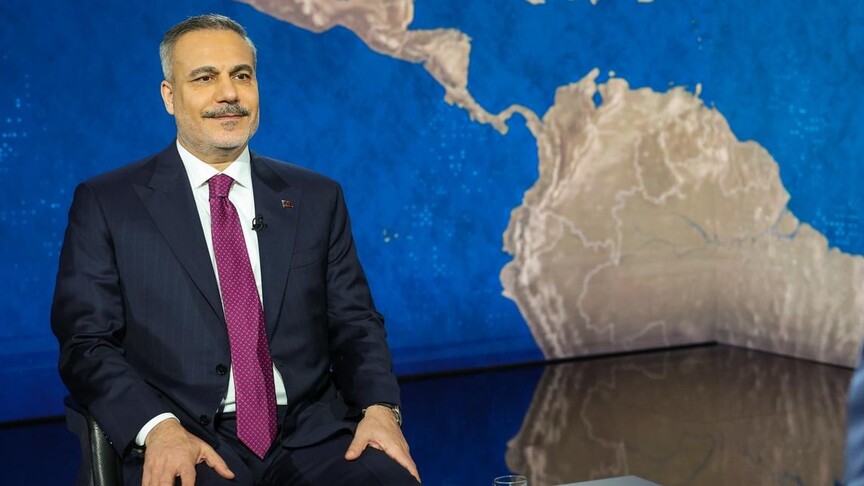
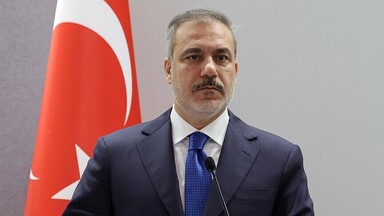
Turkish Foreign Minister Hakan Fidan said he believes both the US and Iran currently show “enough will” to stop the war and reach a lasting settlement, warning that renewed escalation would damage regional stability and the global economy.
Speaking to Al Jazeera’s Resul Serdar in an interview aired Tuesday, Fidan said Türkiye’s immediate priority is ensuring that the ceasefire between Washington and Tehran continues to hold.
“Our most urgent concern is to see the ceasefire is holding actually. This is what we care about at the moment,” Fidan said. “I think there is enough will now … on both sides to stop the war.”
“The alternative of the ceasefire is going back to war, which nobody would like to see that scenario again because right now the entire world economy and energy security is suffering as a result of this war,” he added.
Fidan said everyone hopes to see a negotiated settlement ending the conflict, describing fluctuations in the talks as part of the normal course of diplomacy.
“I think there has been some ups and downs during the talks, and this is the nature of the talks, the negotiation,” he said.
Referring to the latest disagreement between the sides, Fidan said it should be viewed as part of the broader negotiation process and expressed confidence that talks would continue.
“The American side is rejecting what is being proposed, but there is always retailoring of the proposals, rewording,” he said.
“I think it's possible to come up with a new acceptable wording,” he added, noting that mediators and parties involved can revise proposals and positions during negotiations.
Fidan also stressed the importance of restoring free navigation in the Strait of Hormuz to pre-war conditions.
“We want to see a free passage of all the ships, just like was happening before the war,” he added.
“Status quo before the war was what everybody was enjoying,” he said, warning that imposing a new arrangement without broad international acceptance could become “a new source of a new conflict.”
The Turkish foreign minister said Türkiye has sought to contribute to mediation efforts since 2010 but noted that the current process is being “very well conducted” by Pakistan.
“Our job is together with other regional countries, including Qatar, to help them to really perform their best to mediate this very, very difficult task,” he said.
Fidan said Türkiye remains in contact with both sides as well as regional actors involved in the process.
“What we are trying to do, we have our contacts and communications with both sides and plus amongst each other,” he said.
He added that regional countries are also consulting among themselves to help support the diplomatic track.
“Sometimes during the mediation, the most difficult thing is when you get stuck, you are in search of creative ideas,” Fidan said.
“Sometimes the parties cannot provide these ideas. Sometimes the mediators cannot come up with some creative idea. So you need some outside partners, trusted partners,” he added.
Fidan said countries in the region view the process as critically important for regional stability and are therefore trying to contribute as much as possible.
He also said regional coordination and consultations are continuing despite occasional tensions and attacks in some countries.
“In general, the ceasefire is at the moment is holding. But there is a coordination,” he said.
“I wouldn't say maybe a strong coordination between all countries. Some countries, they coordinate, including Türkiye, Qatar, Saudi Arabia, we coordinate. But at least there is a meaningful communication and consultations between the regional countries, including Egypt, Jordan,” he added.
“We all talk to each other to see where we are and how can we really contribute better to ongoing process,” Fidan said.
Fidan warned that renewed fighting could lead to broader instability and deepen concerns over the global economy and energy security.
“It is prone to escalation, it is prone to further tragedy and drama, and negative effects for both the world’s economy and regional stability,” he said.