10 January 2016•Update: 10 January 2016
SEOUL
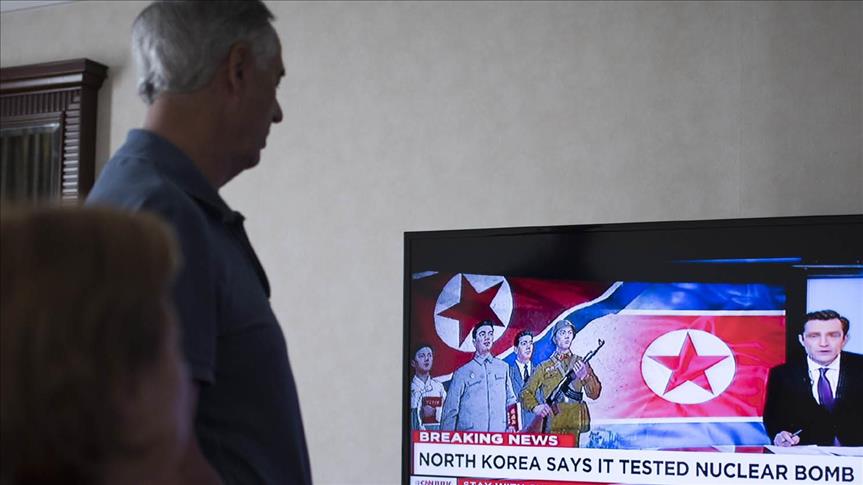
South Korea and the United States put on a show of force for Pyongyang Sunday, as a nuclear missile-carrying B-52 bomber flew over the peninsula just days after North Korea said it had successfully conducted its first hydrogen bomb test.
While the world awaits another United Nations Security Council resolution aimed at reining in the North, the iconic American aircraft’s brief presence before returning to Guam was an obvious reminder to Pyongyang – namely that North Korea is in theory overpowered by the combined strength of the Seoul-Washington alliance.
“The speedier-than-expected deployment could indicate signs of the U.S.' intention that it will retaliate severely if the North makes further provocations,” a South Korean military official was quoted as saying by local news agency Yonhap in response to the flyby.
An official statement from U.S. Pacific Command Admiral Harry B. Harris Jr. made clear that America’s commitment to the South is “ironclad.”
Despite the decades that have passed since the 1950-53 Korean War, an uneasy truce has led to the ongoing deployment of nearly 30,000 U.S. military personnel in South Korea.
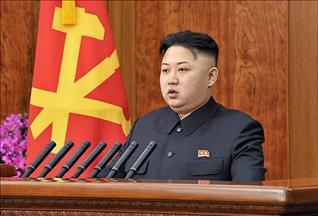
North Korean leader Kim Jong-un maintained that his country’s “H-bomb test” was self-defensive in nature, according to Pyongyang’s state-run KCNA news agency Sunday.
His justification for what the outside world has condemned as a breach of the North’s international commitments came as South Korea’s psychological warfare tactics continued into a third day.
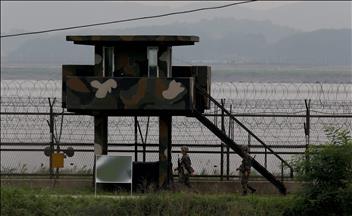
At nearly a dozen places along the heavily guarded inter-Korean border, loudspeakers blared northwards a playlist of anti-Pyongyang propaganda and K-pop.
A similar campaign led to an exchange of fire before a landmark cooperation deal last August – in case of any further fighting, Seoul’s defense ministry said Sunday that the military has been ordered to retaliate “without hesitation.”