YANGON
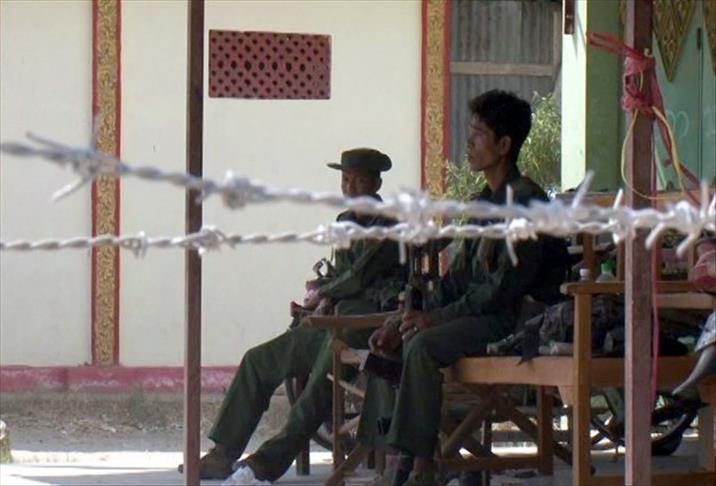
Less than a week after ethnic rebels in Myanmar’s northeast Kokang region declared a cease-fire after four months of fighting against the military, a report says that the two sides are battling again.
The Myanmar Times reported Monday that an unnamed rebel source had said that despite their overtures the Tatmadaw (The Myanmar army) had continued its offensives June 12 and 13, using artillery and infantry.
"The Tatmadaw don’t want peace. They responded by fighting although we declared a unilateral cease-fire on our side,” the source said.
On Friday, neighboring China even went as far as to welcome the announcement by the Myanmar National Democratic Alliance Army (MNDAA).
Foreign Ministry spokesman Hong Lei said that the country hopes that both sides can now show restraint and stop fighting as possible.
"China supports all sides in Myanmar to solve their disputes through negotiation, realize peace and national reconciliation at an early date, and jointly maintain stability in the border areas," Lei said, according to state news agency Xinhua.
"To this end, in accordance with Myanmar's will, China is playing an active and constructive role in promoting the peace process in northern Myanmar, which is welcomed by the Myanmar side. China will continue to play an active role in it," he added.
China has been calling for stability in Myanmar's mountainous northeast, with diplomatic relations being strained as shells landed across the border and Myanmar civilians sought refuge in March and May.
The MNDAA declared the cease-fire after four months of fighting against the military Thursday, withdrawing from positions near the border.
The group said it had pulled back from some areas around the 111 and 113 boundary markers.
However, an unnamed source reported to be close to the government told The Myanmar Times Friday that Myanmar’s army -- the Tatmadaw -- might ignore the cease-fire announcement as their operations remain aimed at securing Kokang.
He added that the army would try to stabilize the area enough for elections to take place in November, when the country goes to the polls.
If a vote was not possible then military rule would continue, he said.
The Kokang Special Region has been under martial law since violence erupted in early February, displacing tens of thousands of people.
At least 200 have been killed on both the government and rebel sides, according to government figures -- which fall short of the casualty count reported by independent media.
The government had excluded Kokang rebels from peace talks that President Thein Sein hopes will lead to a nationwide cease-fire agreement before the general election.
The Times source said that the MNDAA informed its two allies -- the Ta’ang National Liberation Army and the Arakan Army -- before making its cease-fire statement.
Tun Myat Naing, commander-in-chief of the Arakan Army, told the Times that it had no intention of joining the cease-fire, saying the MNDAA's cease-fire reflected the group’s "political and military ambitions."